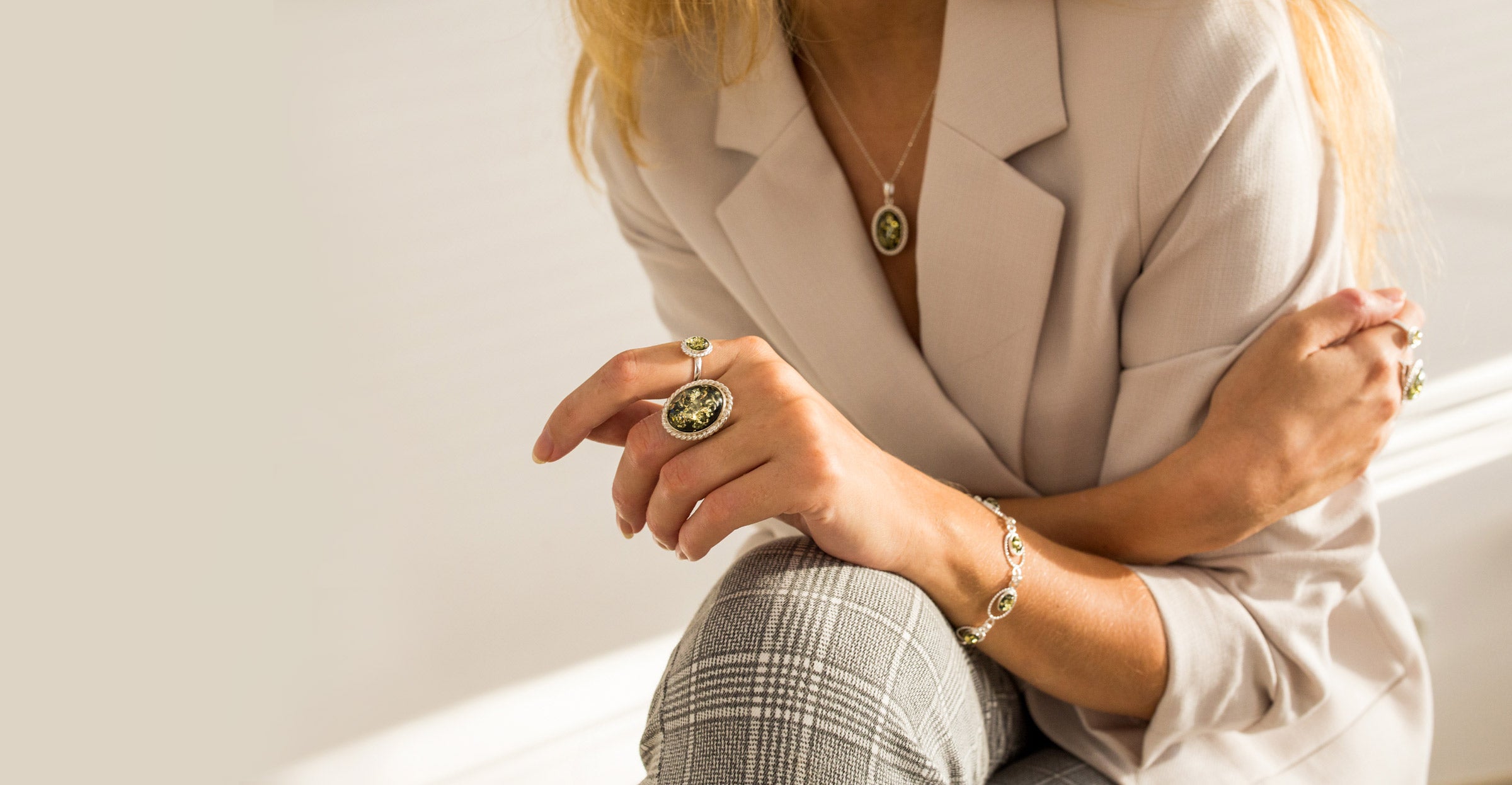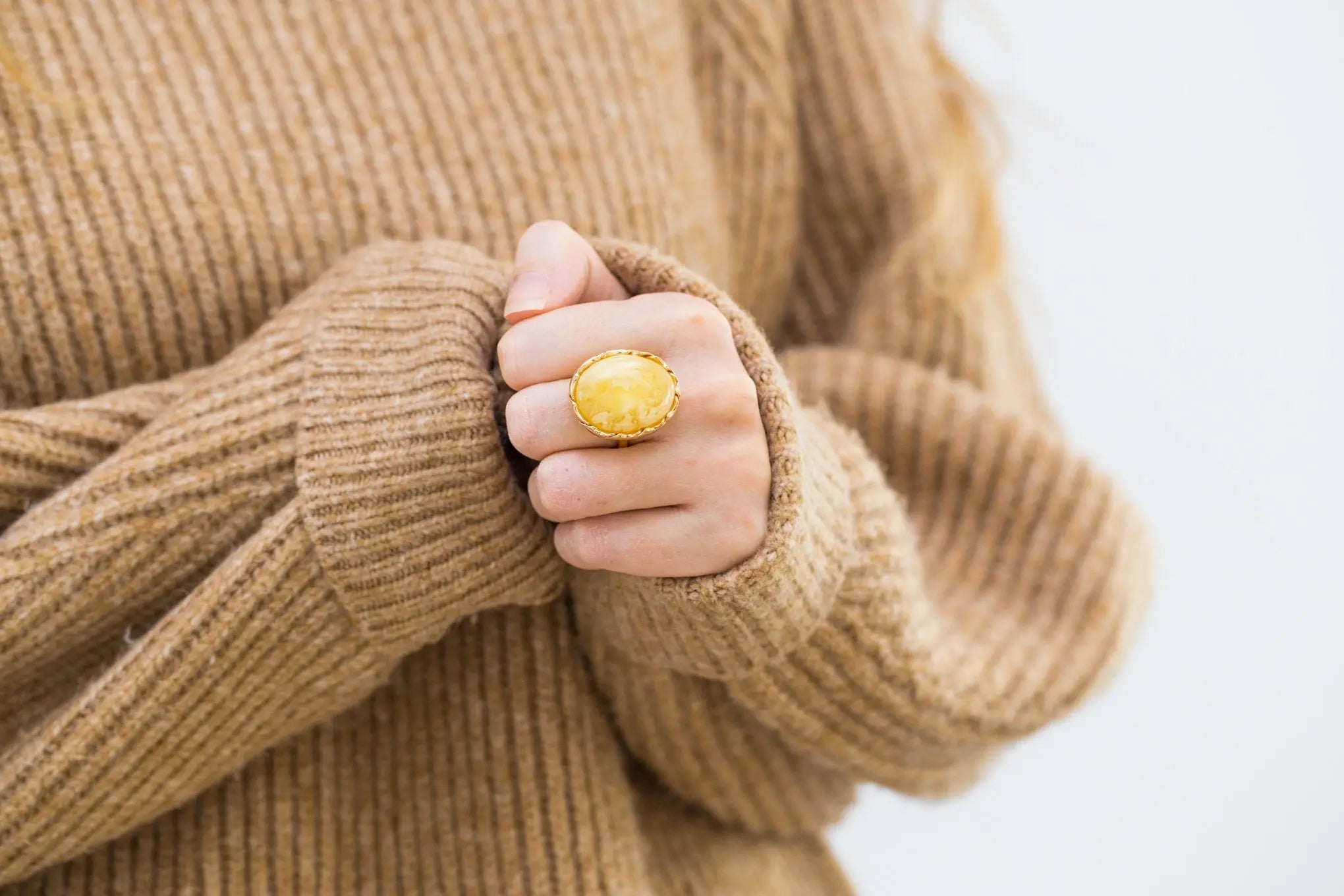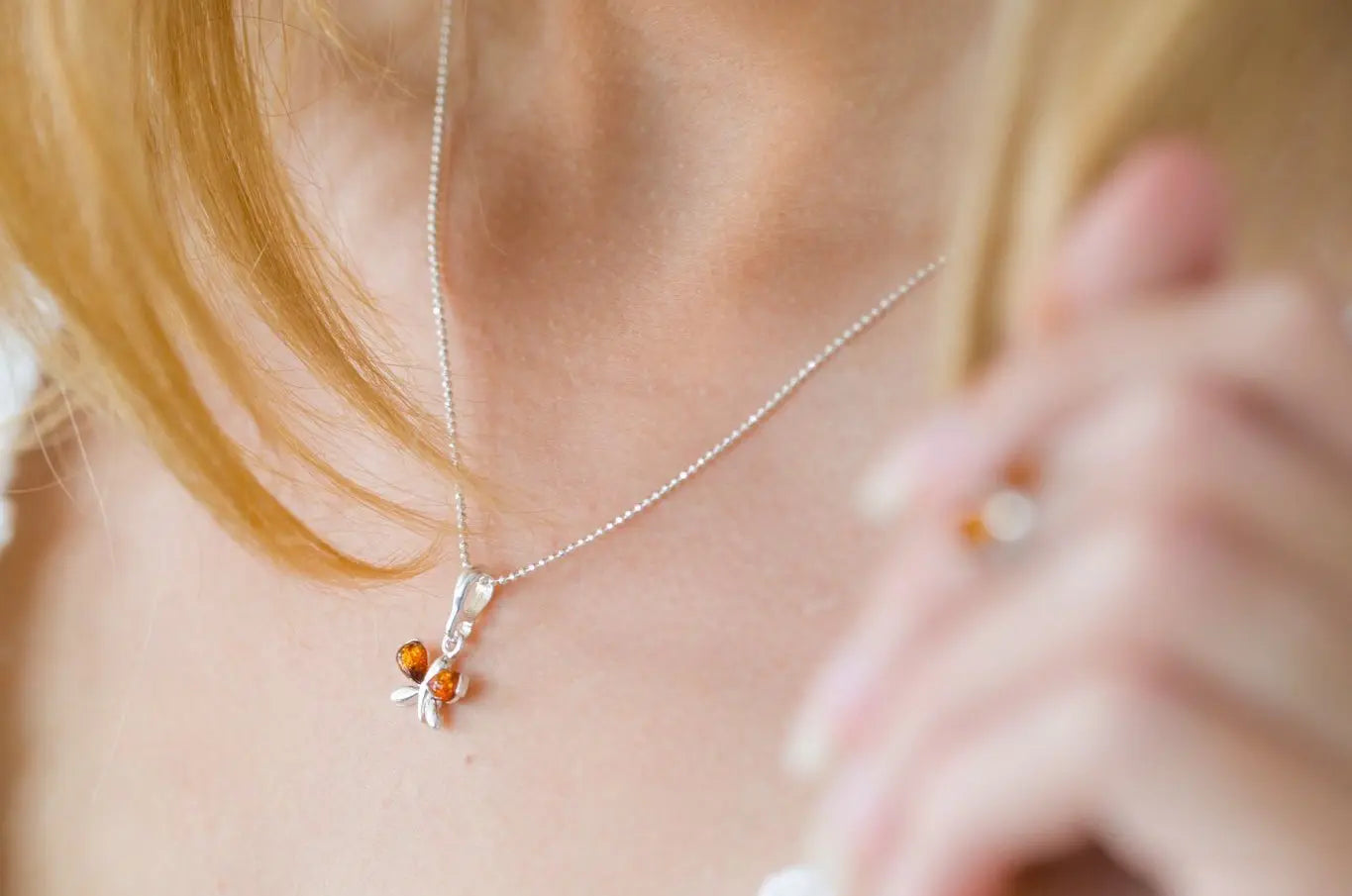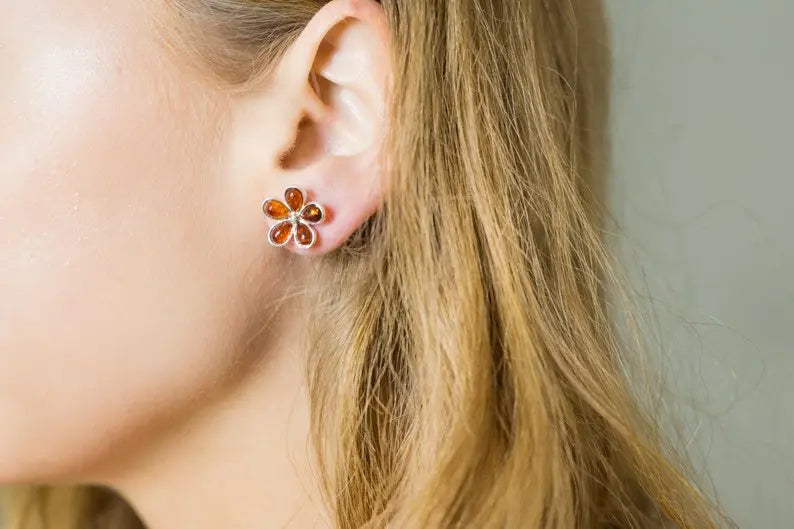
If you have ever turned over a silver ring and squinted at the tiny letters stamped inside, you have probably seen "S925" or just "925". It looks technical. It is not. That little mark is one of the most useful pieces of information a jewellery buyer can have, and once you know what it means, you can shop silver with a lot more confidence.
At Baltic Beauty we set most of our amber pieces in S925 silver, so we get asked about this stamp almost every week. This guide is the answer we give in long form: what S925 actually is, what the "S" adds, how to spot a fake, why it tarnishes (yes, even the real stuff), and how to keep it looking good. No jargon dump. Just the things that actually matter when you are choosing a piece you want to wear for years.
What does S925 mean on jewellery?
S925 is short for "Silver, 92.5% pure". The number tells you the metal's purity by weight: 925 parts pure silver for every 1,000 parts of finished alloy. The remaining 7.5% is almost always copper, which is added because pure silver on its own is too soft to hold a setting, a clasp, or a polished edge for very long.
The leading "S" is simply an abbreviation for "Silver". Some manufacturers use it, some do not. A piece stamped "925" and a piece stamped "S925" are the same alloy. You will see the S more often on imported jewellery, particularly from China and parts of Eastern Europe, because their domestic standards favour the prefixed version. UK and US makers usually drop it.
That is the whole story behind the stamp. Two characters of metal-purity shorthand. No secret grade hidden inside.
Is S925 the same as sterling silver?
Yes. "Sterling silver" is the historical English name for the 92.5/7.5 alloy, codified in Britain back in the 12th century to standardise coin silver. The Royal Mint kept using the name, jewellers borrowed it, and centuries later we still describe rings and chains as "sterling".
So when you see any of the following, they are describing the same metal:
- 925
- S925
- Sterling silver
- 925 sterling silver
- .925
The difference is purely the labelling convention used by whoever made or sold the piece. None is more "real" than another. If you want to be precise about it, a UK hallmarked piece will also carry the Assay Office mark, the maker's mark, and a date letter, which is something the bare 925 stamp on a fashion piece will not include.
How to tell if your S925 silver is real
This is the question that comes up most. Counterfeits do exist, especially in cheaper online marketplaces, and a stamp on its own is not proof. Here are the checks that work, in roughly the order we use them in the workshop.
1. Look at the hallmark. A genuine UK-made sterling piece weighing over 7.78 grams must be hallmarked at one of the four Assay Offices (London, Birmingham, Sheffield or Edinburgh). You should see a small lion passant (the symbol for sterling silver), an Assay Office mark, a date letter, and a sponsor's mark. Imported pieces may only carry the "925" or "S925" stamp, which is legal under the weight threshold but tells you less.
2. The magnet test. Sterling silver is not magnetic. If a strong magnet pulls firmly on a piece, it is almost certainly steel or another base metal with a silver-coloured plating. A weak twitch can come from a steel clasp pin or pivot, so test the body of the piece, not the fittings.
3. The smell test. Real sterling has almost no smell. If a piece smells distinctly metallic or coppery on contact with warm skin, the alloy is probably much less than 92.5% silver.
4. The polish cloth test. Rub the piece gently with a clean white jewellery cloth. Sterling silver leaves a faint black mark on the cloth, which is silver oxide. Plated brass or nickel will not leave that mark, or it will leave a different colour residue.
5. The acid test. This one we save for serious cases. A drop of silver acid (available from jewellery suppliers) on an inconspicuous spot turns bright red on real sterling and any other colour on fakes. It does damage the surface slightly, so this is a last-resort check, not a casual one.
If you bought from a reputable jeweller and the piece has a clear maker's mark, the first two checks are usually plenty.
Does S925 silver tarnish?
Yes, and that is a feature rather than a bug. The 7.5% copper in sterling reacts with sulphur compounds in the air, in cosmetics, in tap water and on skin, slowly forming a black film of silver sulphide on the surface. Pure 999 fine silver tarnishes much less, but pure silver is far too soft for everyday jewellery, so almost no one wears it.
How fast a piece tarnishes depends on a handful of variables. Coastal air, swimming-pool chlorine, hot showers, perfume sprayed straight onto the chain, and high-sulphur foods like eggs all speed it up. Dry air, occasional polishing and storing the piece sealed in a small zip-lock bag with an anti-tarnish strip slow it right down.
The good news is that tarnish is purely surface. It does not weaken the metal and it polishes off easily with a silver cloth or a five-minute soak in a baking soda and warm water bath.
S925 vs other silver and silver-look metals
The world of silver-coloured metal has more grades than most people realise. A quick map:
- Fine silver (.999) — 99.9% pure. Soft, very white, mainly used for bullion and certain art pieces. Not generally suitable for rings or clasps.
- Sterling silver / S925 (.925) — the everyday standard. Strong enough to set stones, soft enough to size and engrave.
- Coin silver (.900) — 90% pure, historically used for US coins. Rare in modern jewellery.
- Britannia silver (.958) — a higher-grade UK standard sometimes used by silversmiths.
- Silver-plated — a thin layer of silver over a base metal, usually brass or copper. Looks identical when new but the plating wears through within a year or two of regular wear.
- Nickel silver / German silver — contains no silver at all. The name is misleading. It is a copper-nickel-zinc alloy and can trigger nickel allergies.
When you see a piece described simply as "silver" with no number, ask. The answer is sometimes plated, and the price tag should reflect that.
Is S925 silver hypoallergenic?
Mostly. Sterling silver itself does not cause reactions in the vast majority of wearers. The 7.5% copper is generally inert against skin. The catch is that some cheaper "sterling" pieces use a small amount of nickel in the alloy or in solder joints, and nickel is one of the most common contact allergens.
If you have a confirmed nickel allergy, ask the seller specifically whether the piece is "nickel-free sterling". Reputable jewellers will know the answer; vague sellers often will not. All of our amber and silver pieces at Baltic Beauty are made to the EU nickel-release standard, which keeps any nickel content well below the level that causes contact dermatitis.
How to care for S925 silver jewellery
A handful of small habits will keep S925 looking new for decades.
Take it off before showering, swimming and applying perfume or sun cream. Wipe it down with a soft cloth after wear so skin oils and salts do not sit overnight. Store each piece separately in a soft pouch or a small lined box, not loose in a drawer where it can scratch other pieces. Polish occasionally with a proper silver cloth, not a paper towel, which can micro-scratch the surface. And if a piece has gemstones or amber, avoid ultrasonic cleaners — the vibration can crack natural stones, including Baltic amber.
For a deeper dive, our jewellery care guide walks through the cleaning routine we recommend for amber and silver pieces specifically.
Why we use S925 silver at Baltic Beauty
Baltic amber is the soul of what we make, but the silver is what holds it together. We chose S925 across our range for three practical reasons.
First, it is strong enough to grip irregular amber cabochons without bending. Amber is light but it has soft, organic curves, and a thinner, purer silver setting would deform within a year. Second, the cool, slightly warm-undertoned colour of sterling complements the honey, cognac and butterscotch tones of Baltic amber better than white gold or rhodium-plated alternatives. Third, it is repairable. A skilled jeweller can resize, re-shank or re-tip an S925 piece a decade from now using exactly the same alloy. That is not true of plated or mixed-metal pieces.
You can browse the full range in our silver jewellery collection, or look specifically at our amber and silver rings and silver earrings.
A note on the UK hallmarking system
If you want to go further down the rabbit hole, the British Hallmarking Council maintains the UK standards, and the Goldsmiths' Company Assay Office has an excellent public reference for reading hallmarks. The short version is: any silver item over 7.78 grams sold in the UK must by law be assayed and marked, and you can tell who made a piece, where, in what year, and at what purity from the marks alone. It is one of the oldest functioning consumer-protection systems in Europe, and a five-minute read will let you decode any silver piece you pick up for the rest of your life.
Frequently asked questions
Is 925 sterling silver good quality?
Yes. 925 sterling silver is the international jewellery standard precisely because it balances purity with durability. Pure silver is too soft for daily wear, while lower-grade silver alloys tarnish faster and can irritate skin. At 92.5% silver, it is high-quality enough to be heirloom material when properly cared for.
What does S925 mean on jewellery?
The "S" stands for "Silver" and "925" indicates the metal is 92.5% pure silver, with the remaining 7.5% typically copper. It is identical in composition to anything stamped just "925" or sold as "sterling silver". The S prefix is more common on jewellery made in China and parts of Eastern Europe.
Does 925 sterling silver tarnish?
Yes, all sterling silver tarnishes over time because of the copper content reacting with sulphur in the air. Tarnish is surface-level only — it does not damage the metal — and a soft polishing cloth or a brief soak in warm water with baking soda will bring back the shine. Storing pieces in sealed pouches with anti-tarnish strips slows the process significantly.
Is 925 sterling silver hypoallergenic?
For most people, yes. The pure silver and copper in sterling rarely cause allergic reactions. However, some cheaper sterling pieces include trace nickel, which is a common allergen. If you have sensitive skin, look for jewellery explicitly labelled "nickel-free sterling" or made to the EU nickel-release standard.
Can you wear S925 silver in the shower?
You can, but you should not make a habit of it. Hot water, soap residue and shampoo all contain compounds that accelerate tarnishing, and chlorinated or hard water can leave deposits in detailed engraving. Take pieces off before showering when you can, and dry them properly afterwards if you forget.
How much is 925 silver worth per gram in the UK?
The scrap value of 925 silver tracks the spot price of pure silver, multiplied by 0.925. As a rough guide, scrap merchants in the UK typically pay around 50–70% of the spot rate per gram, depending on weight and condition. That figure changes daily — the Bullion By Post 925 page is a good source for live numbers. The retail value of a finished piece, of course, includes the design, craftsmanship, gemstones and brand on top of the metal.
Photo: Antonio Uquiche on Unsplash